


Electroshock Entertainment
Haunted Attraction Reviews · Aberdeen, Maryland
The 2026 Review
Legends of the Fog 2026 Review
By Joe Rovinsky for Electroshock Entertainment
In this review
- 2026 Season Details
- The Haunted Hayride and Its Actors
- The Metal Singing Clown and the Finale
- Farewell Hotel and the Crowded Elevator
- CornStalkers and the Value of Getting Lost
- Slaughterhouse and the Hardest Horror in the Park
- The Complete Scream Park
- How the Hayride Compares
- Contact Information
- Final Word
We returned to Legends of the Fog after several years as guests of Patrick Barberry. Having just experienced 301 Devil’s Playground’s massive spectacle, we were interested in the different kind of Halloween night Legends of the Fog offers.
I would call Legends of the Fog Maryland’s strongest scream-park experience among the places we have visited. It is a slightly different proposition from 301. The combination of attractions and midway feels like a more compact counterpart to Field of Screams, with enough quality already in place to suggest that its best years could still be ahead.
The four attractions and midway already form a coherent night, with production quality strong enough to justify the park’s growing popularity. The question is how far that foundation can take the venue. We love much of what exists now and see room for its best scenes to become even more distinctive as the audience grows.
The people, production, and presentation are quality across the board. I would compare much of the show to PG-13 horror, with individual areas approaching an R-level intensity. Those are my tonal comparisons, not official ratings.

The business structure is rock and roll. Strong branding and merchandise give the popular park a recognizable identity, while the compact midway connects attractions that feel substantial in their own right. The drinks operation is a beer garden featuring local craft breweries. It extends the night without being a brewery owned by the haunt.
Legends of the Fog deserves to be considered alongside the strongest scream parks we have visited. These places are difficult to build and even harder to sustain as complete evenings. Field of Screams remains one of the kings of the industry. In Maryland, Legends of the Fog is my strongest recommendation for this particular combination of attractions and midway.
For the scream-park model across the Maryland-to-central-Pennsylvania area, my first instinct is Field of Screams at number one, Legends of the Fog at number two, Shocktoberfest at number three, and Jason’s Woods at number four. We have differing opinions about some details at Jason’s Woods, but we love the place and see a strong future for it. This comparison concerns the complete park structure: multiple attractions, a midway, and enough activity for a full evening.
These are comparisons between different kinds of mega-haunts. A place such as 301 or Pennhurst is not organized around precisely the same scream-park model. I would even put Legends of the Fog ahead of the legendary Bates Motel in some respects, considering the combination of attractions and the surrounding evening. On a less crowded night, that complete experience is especially easy to appreciate.

2026 Season Details
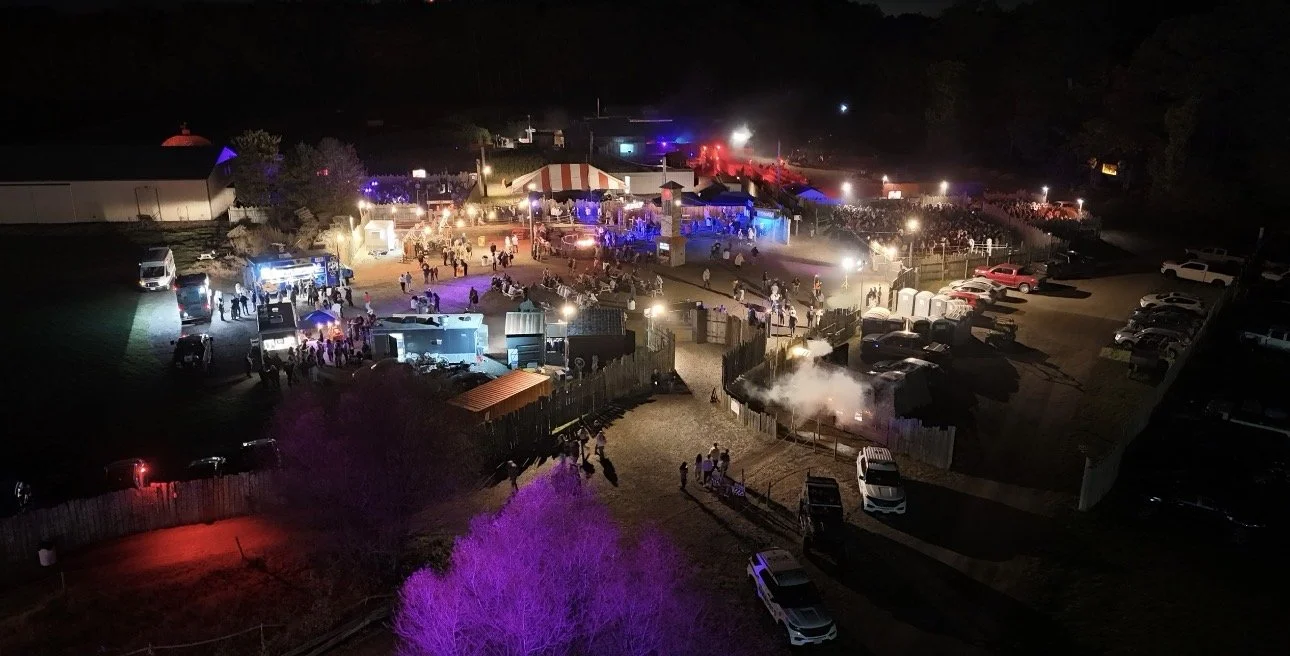
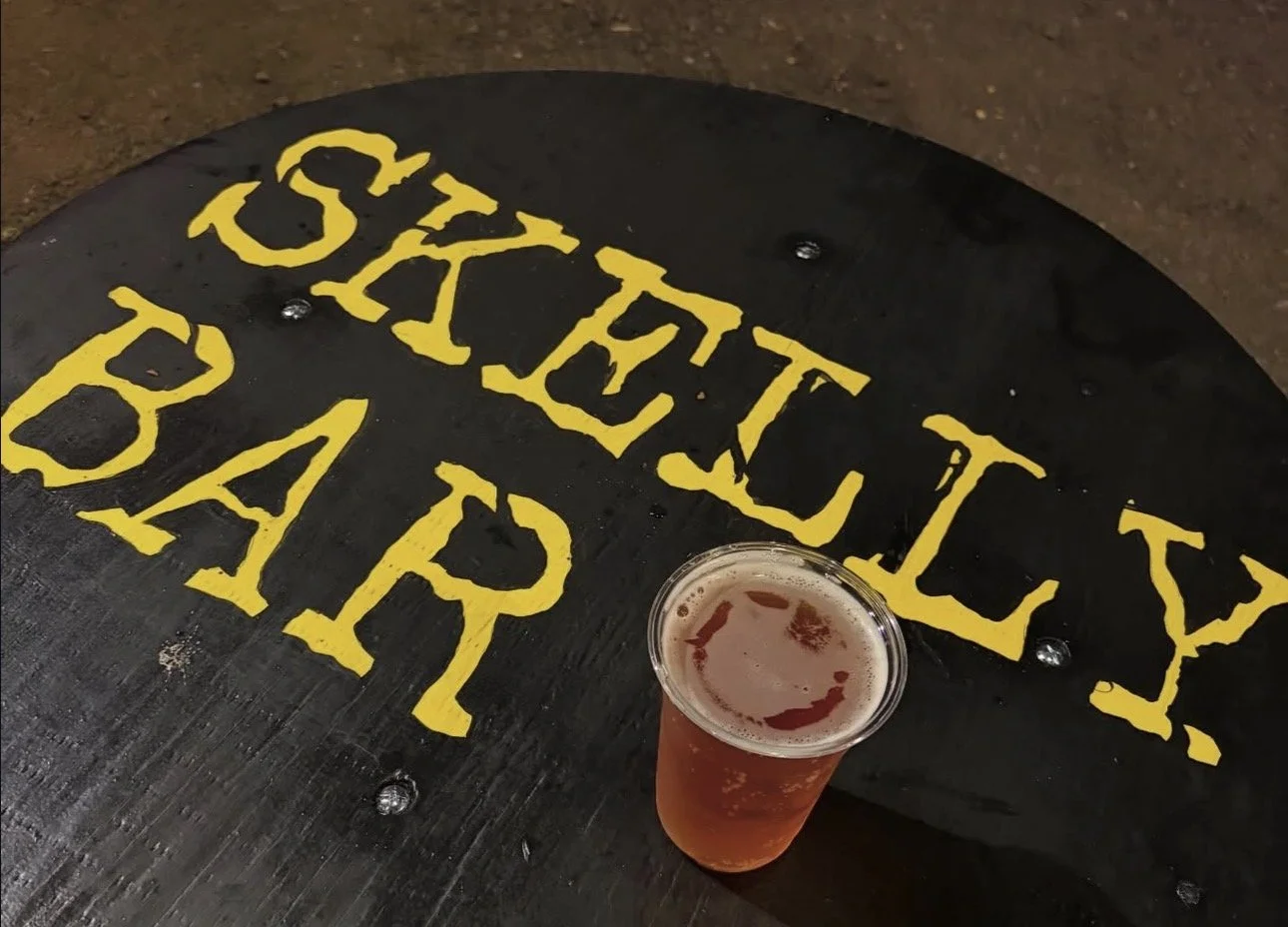
Legends of the Fog in Aberdeen, Maryland, currently presents four attractions: the Haunted Hayride, Farewell Hotel, CornStalkers, and Slaughterhouse. Its official site celebrates twenty years of fear. The midway includes Skelly’s Bar, a beer garden featuring local craft breweries for guests twenty-one and older, along with food, merchandise, games, and bonfires. The tonal ratings and rankings in this review are our judgments. Check the official calendar for the night you plan to attend.


Official attraction artwork · Legends of the Fog
Official attraction information
The Haunted Hayride and Its Actors
The hayride remains the core of the park for us. We regret how few traditional versions of the format seem to remain, especially knowing how demanding their construction, staffing, and operation can be. Legends of the Fog keeps one of the better rides in circulation, with a substantial cast and environments designed to make the wagon’s passage an event.
The hayride has a slaughterhouse sequence, a creepy cemetery, and the range of scenes you expect from a strong seasonal production. It also has a substantial cast. The makeup is first class, the performers are intense, and the wagon moves at a pace that allows their work to register.
Phone expectations need firmer emphasis. The team made an effort to establish them, yet guests still brought screens out during scenes. Consistent reminders and support for the performers would help keep that distraction from becoming part of someone else’s view. It is a small operating refinement with a direct effect on the atmosphere.
Massive pumpkins establish the season, while a slaughter scene brings what looked to me like a meat-grinding device directly onto the wagon. That interaction is memorable. The acting is phenomenal without becoming excessive. A creepy bug sequence adds another flavor of horror. The ride wants to reach a broad audience, and I respect how confidently it does that.

The backwoods scene produces an unexpected giant bear. After so many familiar hillbilly encounters in other haunts, that reveal is a welcome surprise. The actors work hard, the lighting is right, and the sound is rock solid. It is a first-class hayride.
The wharf is one of the ride’s most creative environments. A broken ship, water effects shooting around the wagon, and an evil crab turn a maritime scene into horror. I have not seen that combination on another hayride. It fits the Maryland setting, with a demented Chesapeake-style personality that gives the ride something of its own.
Looking back over the ride, the balance between substantial environments and forceful live performance is what elevates it. Its most memorable scenes have enough individuality to survive comparison with much larger destinations. That gives Legends of the Fog one of the stronger hayrides operating today, independent of what the surrounding park adds to the ticket.
The hayride surrounds you with well-built environments. Those scenes, their sound, and their performers make it one of the stronger rides operating today. Reaper’s Revenge remains difficult to compare directly because its hayride anchors such an extensive larger spectacle.
Most of the material feels original rather than dependent on movie characters. The influences are there, but the scenes have their own identity. A large performer bringing a grinding-looking device through the wagon is a good example. The threat enters the guests’ space instead of remaining scenery beside the route.

Judged on its own, the hayride has a modern confidence and enough distinctive material to justify serious attention. Its appeal does not depend entirely on the larger four-attraction package. The complete park adds value around a ride already capable of standing as a major part of the evening.
The giant bear provides a particularly good lesson in refreshing a familiar backwoods theme. Guests have seen enough hillbilly encounters to predict much of their action. Introducing a creature of that scale breaks the pattern, giving the scene a surprise that belongs to its setting while differing from the usual human threat.
The Maryland-style wharf achieves a similar distinction through local character. Demented crabs and water effects give the maritime setting an identity we do not recall encountering elsewhere. Traditional cemetery and butcher scenes remain part of the ride, so the originality broadens an established Halloween vocabulary instead of replacing it wholesale.
We would happily welcome greater length and further refinement, as we would at many strong hayrides. The present attraction already has the sound, scenic confidence, and performance needed to work. Its continued development should build upon those particular strengths, giving the best ideas more room without turning expansion into an end in itself.
The Metal Singing Clown and the Finale
The finale enters what I described in my visit notes as an ice scene, where a creepy, clown-like metal singer supplies its defining personality. Singing in a haunt can be cheesy as hell. Here, the performance has an intensity that belongs to the surrounding action, turning an unexpected musical encounter into a convincing horror finale.
His metal song seems to belong to the scene around him. It gives the ending a character and a sound of its own. So often this kind of thing comes off as corny, crappy bullshit. This performer makes it work.
The singer is distinctive enough to become a recognizable attraction character. His appearance, sound, and willingness to deliver what feels like a full metal performance make the encounter memorable. The talent is already there. A stronger public identity could let audiences anticipate him before arriving without diminishing the surprise of the live scene.
Make even more of that identity. Give him a distinctive face in the marketing and let the audience recognize him before they arrive. His taunting, the surrounding clowns, and the chainsaw energy create an unusual ending. He already looks cool. The opportunity is to make him one of the attraction’s recognizable personalities.
That combination gives the ending a solid identity of its own. The scene’s strangeness remains grounded in performance, allowing humor and musical spectacle without dissolving the threat. Difference becomes valuable when the audience leaves remembering a particular character and environment, and this finale provides both.
Farewell Hotel and the Crowded Elevator
Farewell Hotel brings us to a traditional haunted-house experience, beginning with check-in and a strikingly tall bellhop character. The elevator establishes the transition into the house. On our visit, the number of people loaded into it was the problem.
Beyond that, this is a dependable haunted house: creepy hallways, dolls, and the kinds of rooms you hope to find inside a haunted hotel. It is well presented. It does not have to reinvent the format to give you a quality experience.


The elevator needs smaller groups. Being pressed against strangers on a bouncing platform made me want personal space far more urgently than another effect. I found the crowding gross and uncomfortable; that reaction describes my experience rather than a finding about sanitation. However entertaining the machinery might be, the loading decision pulled me out of the hotel’s world.
Limit the load to preserve the scene, or reconsider using the elevator in its current form. The same principle applies to similar devices at Hersheypark, Valley of Fear, and other attractions. Movement cannot compensate for a room so crowded that the guest is preoccupied with the people pressed beside them. Capacity belongs to the theatrical experience as much as to the queue outside.
The hotel is a quality attraction. The actors and scenes serve its traditional haunted-house identity. It is not the standout innovation of the park, but it does the job it promises.
Pacing could still be refined as the crowds grow. Outside the crowded elevator, we could generally control our walking pace and did not experience sustained group congestion. The haunted-mansion scenery is respectable and well constructed. The elevator complaint and the broader walkthrough experience are different parts of that visit.
CornStalkers and the Value of Getting Lost
CornStalkers takes the experience in a more interesting direction. There are fewer traditional corn mazes left than I would like, and I am grateful that Legends of the Fog has kept the format alive.
A large scream park cannot always reproduce the sprawling, unpredictable corn maze you remember from childhood. Here, they preserve enough of that freedom to make it work. You leave a barn, enter the corn, and encounter scenes and a solid number of actors without losing the feeling of finding your own way.
The cornstalks are massive. Our group started with nine people, but the maze still gave us choices about where to go. The actors taunt you while you try to escape. It is not a puzzle designed to defeat everybody; it gives you enough independence to make finding the way satisfying.


The characters do not need extravagant makeup to work in the corn. Pumpkins and scarecrows are already creepy when they can disappear into the stalks. Signs point and taunt. Choose a direction, follow it, and discover whether it has actually helped you escape. That uncertainty is the pleasure of the attraction.
There are several points where you have to choose your route. The navigation is not rocket science, but it is enough to lose yourself in the experience. Giant corn, darkness, atmosphere, and actors who understand the setting give a straightforward idea everything it needs.
CornStalkers demonstrates the strength of traditional haunting. The corn already supplies enclosure, concealment, and uncertainty, allowing straightforward scenic choices and performers to complete the atmosphere. Its simplicity has a clear purpose. The guest experiences enough freedom to feel involved in finding an exit, and the setting makes that ordinary task enjoyable again.
Legends of the Fog preserves both the hayride and the corn maze as active parts of a modern park. We want those formats to remain part of the industry’s evolution. Each offers a different relationship with the landscape, and this property shows how familiar seasonal traditions can coexist with stronger contemporary production.
Slaughterhouse and the Hardest Horror in the Park
Slaughterhouse earns its title through an uncompromisingly ugly environment. The familiar industry theme regains force in the intensity of its imagery and the conviction surrounding it. This is the park’s harder horror encounter, built to move the night beyond the more broadly accessible pleasures of the hayride and maze.
The cast supplies the strongest acting we encountered at Legends of the Fog. Its viciousness has a setting capable of sustaining it, with gruesome scenes and a disorienting route giving performers several ways to keep pressure on the visitors. The interaction commits to brutality with a confidence that distinguishes the attraction from the rest of the lineup.

A horror fan entering a slaughterhouse expects pigs, monstrous animals, mutilated bodies, staged killing, brutal weapons, and chainsaws. All of that is here. The violence is the identity of the attraction, and the show follows through on it.
That change of intensity gives the four-attraction evening another dimension. Slaughterhouse is the bloodiest and most violently disorienting part of the package, allowing the park to reserve a harsher form of horror for visitors willing to enter it. The contrast makes its character more apparent after the other experiences.
Even the atmosphere around the Slaughterhouse prepares you for the change. The sound, makeup, characters, and masks communicate viciousness. Blood and gruesome brutality are everywhere. I would call it the main event, and it feels built to hold that position.
Embrace that identity. A mainstream scream park can offer a broad evening while allowing its slaughterhouse to become pure theatrical violence. The attraction has chosen a premise with ugly implications and follows those implications into the performance. Softening the encounter merely to match the rest of the park would weaken the difference that gives it value.
It is a fucking slaughterhouse, and it has the conviction to feel like one: mutilated bodies, entrails, enormous butchers, and an atmosphere devoted to the grotesque business around you. That commitment is what makes the familiar concept work. We loved how fully the show followed its own brutal intention.


The Complete Scream Park
The combination of distinct attractions, merchandise, alcohol service, and a well-developed midway makes this a great compact scream park. The quality continues between the major encounters instead of disappearing when you leave a queue.
By compact, I mean the way the whole evening fits together, not the size of the individual attractions. Field of Screams is still the closest comparison for the structure. The hayride reaches a broad audience. By the Slaughterhouse, the park has taken you somewhere much harder.
Acting, makeup, costume, and the wider presentation sustain a quality evening across the property. Guests commit their money and time to these seasonal visits, and consistency matters as much as a single impressive encounter. Legends of the Fog gives us enough confidence in the complete show to recommend the park while still identifying where crowding interfered with it.
How the Hayride Compares
Comparing the hayride alone produces a different discussion from ranking the complete scream park. Valley of Fear’s reinvention puts it near the top of our current thinking, and Legends of the Fog competes through its original scenes and intense cast. Legends of Fear adds another difficult comparison, particularly because its exceptional walking trail can dominate our memory of the combined night.
Legends of Fear complicates any hayride ranking because its walking trail is so impressive that it changes how we remember the whole night. Its hayride also has an extraordinary drive-through mansion scene that continues to improve. Legends of the Fog competes through intense actors, great sound, and scenes that surround the wagon. These are different strengths, and reducing them to a number is difficult.
Reaper’s Revenge presents a further complication. We tend to evaluate it as an enormous connected spectacle anchored by the hayride, which makes a narrow comparison with another individual ride less satisfying. Separating those formats explains why our preferences can shift when we move between judging a single attraction and remembering the complete property.
Field of Screams remains a benchmark for the standalone hayride experience within a larger park. Its long-established production gives it a strong claim in any personal ordering of the rides we know. Valley of Fear’s current innovation and style make it a particularly close rival. The comparison becomes interesting precisely because each excels through a somewhat different approach.
There are moments when Valley of Fear feels like the stronger hayride to us, a judgment we would once have found difficult to imagine. Its recent transformation has changed the comparison. That reaction belongs to our present enthusiasm rather than a permanent verdict against Field of Screams. A season this strong should be allowed to challenge an established favorite.
On reconsideration, we could still place Field of Screams first, Valley of Fear second, and Legends of the Fog close behind, with Legends of Fear capable of challenging those latter positions. We are not settling an awards chart here. The changing order reflects the closeness of several excellent productions and the different qualities each makes us value.
Legends of Fear’s world-class hayride deserves to remain among those contenders even when The Hallow leaves the larger impression. Its visible production resources, ambitious environments, and immense mansion sequence place it beside the format’s strongest names. A possible tie around those second and third positions would be a reasonable expression of our preferences. The distinctions are smaller than a numbered list makes them appear.
Bates Motel remains a legendary spectacle and an attraction we love, though parts of its familiar presentation have lost some luster for us. Its established scenes can now feel more standardized beside rides undergoing dramatic reinvention. That is a personal response to repeated visits, not a denial of the achievement that made Bates one of the industry’s enduring names.
My impression is that Bates has reached a point where reviews have less influence on its business than the reputation it has already built. It remains world class, but some of the familiar material has lost its luster for me. I do not know the operation’s finances or its private attitude toward reviewers.
Hell’s Nightmares in Dallas, Pennsylvania, also belongs in a discussion of strong, traditional hayrides. There are fewer of these experiences than I would like, and I appreciate places that keep the format alive.
Hayrides should remain a staple of haunted entertainment. Few formats can gather an audience together, move it through enormous outdoor worlds, and make a distant environment seem to approach the entire group at once. We want more operators to preserve and develop that tradition. Legends of the Fog’s work is one reason we still believe it belongs at the core of the industry.
Jason’s Woods also deserves a place in that conversation. We love the property and count its people as friends. Its hayride is already impressive, with changes and updates offering further room to develop. It has the potential to become even more extraordinary. The comparison reinforces how much strong traditional hayride work remains worth supporting.
Rankings can become a rabbit hole, but they should not obscure the judgment at the center of this review: Legends of the Fog does a great deal really, really fucking well. It is an excellent scream park whose hayride brings enough personality to deserve attention on its own.
The hayride has unique scenes even within familiar themes. That is enough to make it worth a larger discussion of the format. For this review, the important thing is how well those scenes serve Legends of the Fog.
Contact Information
Location 500 Carsins Run Road, Aberdeen, MD 21001
Website legendsofthefog.com
Final Word
Legends of the Fog has earned a place in our conversation about the strongest scream parks in this region. The hayride has original scenes and a cast that works hard. CornStalkers preserves the pleasure of genuinely finding your way out of the corn. Farewell Hotel supplies a dependable haunted-house experience, although its elevator needs smaller groups. Slaughterhouse delivers the night’s most vicious performance. The midway and branding make the four attractions feel like one complete evening. Keep those distinctive scenes, protect the pacing, and give that metal-singing clown the larger identity he deserves.
Image credits & official sources
Images and attraction artwork are sourced from Legends of the Fog’s official website. Gallery imagery may include archive material and is illustrative; it is not presented as photography of the reviewer’s 2026 visit. Original credits and watermarks are retained.
Official website · Official media · Official Facebooknment
Haunted Attraction Reviews · Aberdeen, Maryland
The 2026 Review
Legends of the Fog 2026 Review
By Joe Rovinsky for Electroshock Entertainment
In this review
- 2026 Season Details
- The Haunted Hayride and Its Actors
- The Metal Singing Clown and the Finale
- Farewell Hotel and the Crowded Elevator
- CornStalkers and the Value of Getting Lost
- Slaughterhouse and the Hardest Horror in the Park
- The Complete Scream Park
- How the Hayride Compares
- Contact Information
- Final Word
We returned to Legends of the Fog after several years as guests of Patrick Barberry. Having just experienced 301 Devil’s Playground’s massive spectacle, we were interested in the different kind of Halloween night Legends of the Fog offers.
I would call Legends of the Fog Maryland’s strongest scream-park experience among the places we have visited. It is a slightly different proposition from 301. The combination of attractions and midway feels like a more compact counterpart to Field of Screams, with enough quality already in place to suggest that its best years could still be ahead.
The four attractions and midway already form a coherent night, with production quality strong enough to justify the park’s growing popularity. The question is how far that foundation can take the venue. We love much of what exists now and see room for its best scenes to become even more distinctive as the audience grows.
The people, production, and presentation are quality across the board. I would compare much of the show to PG-13 horror, with individual areas approaching an R-level intensity. Those are my tonal comparisons, not official ratings.
The business structure is rock and roll. Strong branding and merchandise give the popular park a recognizable identity, while the compact midway connects attractions that feel substantial in their own right. The drinks operation is a beer garden featuring local craft breweries. It extends the night without being a brewery owned by the haunt.
Legends of the Fog deserves to be considered alongside the strongest scream parks we have visited. These places are difficult to build and even harder to sustain as complete evenings. Field of Screams remains one of the kings of the industry. In Maryland, Legends of the Fog is my strongest recommendation for this particular combination of attractions and midway.
For the scream-park model across the Maryland-to-central-Pennsylvania area, my first instinct is Field of Screams at number one, Legends of the Fog at number two, Shocktoberfest at number three, and Jason’s Woods at number four. We have differing opinions about some details at Jason’s Woods, but we love the place and see a strong future for it. This comparison concerns the complete park structure: multiple attractions, a midway, and enough activity for a full evening.
These are comparisons between different kinds of mega-haunts. A place such as 301 or Pennhurst is not organized around precisely the same scream-park model. I would even put Legends of the Fog ahead of the legendary Bates Motel in some respects, considering the combination of attractions and the surrounding evening. On a less crowded night, that complete experience is especially easy to appreciate.
2026 Season Details
Legends of the Fog in Aberdeen, Maryland, currently presents four attractions: the Haunted Hayride, Farewell Hotel, CornStalkers, and Slaughterhouse. Its official site celebrates twenty years of fear. The midway includes Skelly’s Bar, a beer garden featuring local craft breweries for guests twenty-one and older, along with food, merchandise, games, and bonfires. The tonal ratings and rankings in this review are our judgments. Check the official calendar for the night you plan to attend.
Official attraction artwork · Legends of the Fog
Official attraction information
The Haunted Hayride and Its Actors
The hayride remains the core of the park for us. We regret how few traditional versions of the format seem to remain, especially knowing how demanding their construction, staffing, and operation can be. Legends of the Fog keeps one of the better rides in circulation, with a substantial cast and environments designed to make the wagon’s passage an event.
The hayride has a slaughterhouse sequence, a creepy cemetery, and the range of scenes you expect from a strong seasonal production. It also has a substantial cast. The makeup is first class, the performers are intense, and the wagon moves at a pace that allows their work to register.
Phone expectations need firmer emphasis. The team made an effort to establish them, yet guests still brought screens out during scenes. Consistent reminders and support for the performers would help keep that distraction from becoming part of someone else’s view. It is a small operating refinement with a direct effect on the atmosphere.
Massive pumpkins establish the season, while a slaughter scene brings what looked to me like a meat-grinding device directly onto the wagon. That interaction is memorable. The acting is phenomenal without becoming excessive. A creepy bug sequence adds another flavor of horror. The ride wants to reach a broad audience, and I respect how confidently it does that.
The backwoods scene produces an unexpected giant bear. After so many familiar hillbilly encounters in other haunts, that reveal is a welcome surprise. The actors work hard, the lighting is right, and the sound is rock solid. It is a first-class hayride.
The wharf is one of the ride’s most creative environments. A broken ship, water effects shooting around the wagon, and an evil crab turn a maritime scene into horror. I have not seen that combination on another hayride. It fits the Maryland setting, with a demented Chesapeake-style personality that gives the ride something of its own.
Looking back over the ride, the balance between substantial environments and forceful live performance is what elevates it. Its most memorable scenes have enough individuality to survive comparison with much larger destinations. That gives Legends of the Fog one of the stronger hayrides operating today, independent of what the surrounding park adds to the ticket.
The hayride surrounds you with well-built environments. Those scenes, their sound, and their performers make it one of the stronger rides operating today. Reaper’s Revenge remains difficult to compare directly because its hayride anchors such an extensive larger spectacle.
Most of the material feels original rather than dependent on movie characters. The influences are there, but the scenes have their own identity. A large performer bringing a grinding-looking device through the wagon is a good example. The threat enters the guests’ space instead of remaining scenery beside the route.
Judged on its own, the hayride has a modern confidence and enough distinctive material to justify serious attention. Its appeal does not depend entirely on the larger four-attraction package. The complete park adds value around a ride already capable of standing as a major part of the evening.
The giant bear provides a particularly good lesson in refreshing a familiar backwoods theme. Guests have seen enough hillbilly encounters to predict much of their action. Introducing a creature of that scale breaks the pattern, giving the scene a surprise that belongs to its setting while differing from the usual human threat.
The Maryland-style wharf achieves a similar distinction through local character. Demented crabs and water effects give the maritime setting an identity we do not recall encountering elsewhere. Traditional cemetery and butcher scenes remain part of the ride, so the originality broadens an established Halloween vocabulary instead of replacing it wholesale.
We would happily welcome greater length and further refinement, as we would at many strong hayrides. The present attraction already has the sound, scenic confidence, and performance needed to work. Its continued development should build upon those particular strengths, giving the best ideas more room without turning expansion into an end in itself.
The Metal Singing Clown and the Finale
The finale enters what I described in my visit notes as an ice scene, where a creepy, clown-like metal singer supplies its defining personality. Singing in a haunt can be cheesy as hell. Here, the performance has an intensity that belongs to the surrounding action, turning an unexpected musical encounter into a convincing horror finale.
His metal song seems to belong to the scene around him. It gives the ending a character and a sound of its own. So often this kind of thing comes off as corny, crappy bullshit. This performer makes it work.
The singer is distinctive enough to become a recognizable attraction character. His appearance, sound, and willingness to deliver what feels like a full metal performance make the encounter memorable. The talent is already there. A stronger public identity could let audiences anticipate him before arriving without diminishing the surprise of the live scene.
Make even more of that identity. Give him a distinctive face in the marketing and let the audience recognize him before they arrive. His taunting, the surrounding clowns, and the chainsaw energy create an unusual ending. He already looks cool. The opportunity is to make him one of the attraction’s recognizable personalities.
That combination gives the ending a solid identity of its own. The scene’s strangeness remains grounded in performance, allowing humor and musical spectacle without dissolving the threat. Difference becomes valuable when the audience leaves remembering a particular character and environment, and this finale provides both.
Farewell Hotel and the Crowded Elevator
Farewell Hotel brings us to a traditional haunted-house experience, beginning with check-in and a strikingly tall bellhop character. The elevator establishes the transition into the house. On our visit, the number of people loaded into it was the problem.
Beyond that, this is a dependable haunted house: creepy hallways, dolls, and the kinds of rooms you hope to find inside a haunted hotel. It is well presented. It does not have to reinvent the format to give you a quality experience.
The elevator needs smaller groups. Being pressed against strangers on a bouncing platform made me want personal space far more urgently than another effect. I found the crowding gross and uncomfortable; that reaction describes my experience rather than a finding about sanitation. However entertaining the machinery might be, the loading decision pulled me out of the hotel’s world.
Limit the load to preserve the scene, or reconsider using the elevator in its current form. The same principle applies to similar devices at Hersheypark, Valley of Fear, and other attractions. Movement cannot compensate for a room so crowded that the guest is preoccupied with the people pressed beside them. Capacity belongs to the theatrical experience as much as to the queue outside.
The hotel is a quality attraction. The actors and scenes serve its traditional haunted-house identity. It is not the standout innovation of the park, but it does the job it promises.
Pacing could still be refined as the crowds grow. Outside the crowded elevator, we could generally control our walking pace and did not experience sustained group congestion. The haunted-mansion scenery is respectable and well constructed. The elevator complaint and the broader walkthrough experience are different parts of that visit.
CornStalkers and the Value of Getting Lost
CornStalkers takes the experience in a more interesting direction. There are fewer traditional corn mazes left than I would like, and I am grateful that Legends of the Fog has kept the format alive.
A large scream park cannot always reproduce the sprawling, unpredictable corn maze you remember from childhood. Here, they preserve enough of that freedom to make it work. You leave a barn, enter the corn, and encounter scenes and a solid number of actors without losing the feeling of finding your own way.
The cornstalks are massive. Our group started with nine people, but the maze still gave us choices about where to go. The actors taunt you while you try to escape. It is not a puzzle designed to defeat everybody; it gives you enough independence to make finding the way satisfying.
The characters do not need extravagant makeup to work in the corn. Pumpkins and scarecrows are already creepy when they can disappear into the stalks. Signs point and taunt. Choose a direction, follow it, and discover whether it has actually helped you escape. That uncertainty is the pleasure of the attraction.
There are several points where you have to choose your route. The navigation is not rocket science, but it is enough to lose yourself in the experience. Giant corn, darkness, atmosphere, and actors who understand the setting give a straightforward idea everything it needs.
CornStalkers demonstrates the strength of traditional haunting. The corn already supplies enclosure, concealment, and uncertainty, allowing straightforward scenic choices and performers to complete the atmosphere. Its simplicity has a clear purpose. The guest experiences enough freedom to feel involved in finding an exit, and the setting makes that ordinary task enjoyable again.
Legends of the Fog preserves both the hayride and the corn maze as active parts of a modern park. We want those formats to remain part of the industry’s evolution. Each offers a different relationship with the landscape, and this property shows how familiar seasonal traditions can coexist with stronger contemporary production.
Slaughterhouse and the Hardest Horror in the Park
Slaughterhouse earns its title through an uncompromisingly ugly environment. The familiar industry theme regains force in the intensity of its imagery and the conviction surrounding it. This is the park’s harder horror encounter, built to move the night beyond the more broadly accessible pleasures of the hayride and maze.
The cast supplies the strongest acting we encountered at Legends of the Fog. Its viciousness has a setting capable of sustaining it, with gruesome scenes and a disorienting route giving performers several ways to keep pressure on the visitors. The interaction commits to brutality with a confidence that distinguishes the attraction from the rest of the lineup.
A horror fan entering a slaughterhouse expects pigs, monstrous animals, mutilated bodies, staged killing, brutal weapons, and chainsaws. All of that is here. The violence is the identity of the attraction, and the show follows through on it.
That change of intensity gives the four-attraction evening another dimension. Slaughterhouse is the bloodiest and most violently disorienting part of the package, allowing the park to reserve a harsher form of horror for visitors willing to enter it. The contrast makes its character more apparent after the other experiences.
Even the atmosphere around the Slaughterhouse prepares you for the change. The sound, makeup, characters, and masks communicate viciousness. Blood and gruesome brutality are everywhere. I would call it the main event, and it feels built to hold that position.
Embrace that identity. A mainstream scream park can offer a broad evening while allowing its slaughterhouse to become pure theatrical violence. The attraction has chosen a premise with ugly implications and follows those implications into the performance. Softening the encounter merely to match the rest of the park would weaken the difference that gives it value.
It is a fucking slaughterhouse, and it has the conviction to feel like one: mutilated bodies, entrails, enormous butchers, and an atmosphere devoted to the grotesque business around you. That commitment is what makes the familiar concept work. We loved how fully the show followed its own brutal intention.
The Complete Scream Park
The combination of distinct attractions, merchandise, alcohol service, and a well-developed midway makes this a great compact scream park. The quality continues between the major encounters instead of disappearing when you leave a queue.
By compact, I mean the way the whole evening fits together, not the size of the individual attractions. Field of Screams is still the closest comparison for the structure. The hayride reaches a broad audience. By the Slaughterhouse, the park has taken you somewhere much harder.
Acting, makeup, costume, and the wider presentation sustain a quality evening across the property. Guests commit their money and time to these seasonal visits, and consistency matters as much as a single impressive encounter. Legends of the Fog gives us enough confidence in the complete show to recommend the park while still identifying where crowding interfered with it.
How the Hayride Compares
Comparing the hayride alone produces a different discussion from ranking the complete scream park. Valley of Fear’s reinvention puts it near the top of our current thinking, and Legends of the Fog competes through its original scenes and intense cast. Legends of Fear adds another difficult comparison, particularly because its exceptional walking trail can dominate our memory of the combined night.
Legends of Fear complicates any hayride ranking because its walking trail is so impressive that it changes how we remember the whole night. Its hayride also has an extraordinary drive-through mansion scene that continues to improve. Legends of the Fog competes through intense actors, great sound, and scenes that surround the wagon. These are different strengths, and reducing them to a number is difficult.
Reaper’s Revenge presents a further complication. We tend to evaluate it as an enormous connected spectacle anchored by the hayride, which makes a narrow comparison with another individual ride less satisfying. Separating those formats explains why our preferences can shift when we move between judging a single attraction and remembering the complete property.
Field of Screams remains a benchmark for the standalone hayride experience within a larger park. Its long-established production gives it a strong claim in any personal ordering of the rides we know. Valley of Fear’s current innovation and style make it a particularly close rival. The comparison becomes interesting precisely because each excels through a somewhat different approach.
There are moments when Valley of Fear feels like the stronger hayride to us, a judgment we would once have found difficult to imagine. Its recent transformation has changed the comparison. That reaction belongs to our present enthusiasm rather than a permanent verdict against Field of Screams. A season this strong should be allowed to challenge an established favorite.
On reconsideration, we could still place Field of Screams first, Valley of Fear second, and Legends of the Fog close behind, with Legends of Fear capable of challenging those latter positions. We are not settling an awards chart here. The changing order reflects the closeness of several excellent productions and the different qualities each makes us value.
Legends of Fear’s world-class hayride deserves to remain among those contenders even when The Hallow leaves the larger impression. Its visible production resources, ambitious environments, and immense mansion sequence place it beside the format’s strongest names. A possible tie around those second and third positions would be a reasonable expression of our preferences. The distinctions are smaller than a numbered list makes them appear.
Bates Motel remains a legendary spectacle and an attraction we love, though parts of its familiar presentation have lost some luster for us. Its established scenes can now feel more standardized beside rides undergoing dramatic reinvention. That is a personal response to repeated visits, not a denial of the achievement that made Bates one of the industry’s enduring names.
My impression is that Bates has reached a point where reviews have less influence on its business than the reputation it has already built. It remains world class, but some of the familiar material has lost its luster for me. I do not know the operation’s finances or its private attitude toward reviewers.
Hell’s Nightmares in Dallas, Pennsylvania, also belongs in a discussion of strong, traditional hayrides. There are fewer of these experiences than I would like, and I appreciate places that keep the format alive.
Hayrides should remain a staple of haunted entertainment. Few formats can gather an audience together, move it through enormous outdoor worlds, and make a distant environment seem to approach the entire group at once. We want more operators to preserve and develop that tradition. Legends of the Fog’s work is one reason we still believe it belongs at the core of the industry.
Jason’s Woods also deserves a place in that conversation. We love the property and count its people as friends. Its hayride is already impressive, with changes and updates offering further room to develop. It has the potential to become even more extraordinary. The comparison reinforces how much strong traditional hayride work remains worth supporting.
Rankings can become a rabbit hole, but they should not obscure the judgment at the center of this review: Legends of the Fog does a great deal really, really fucking well. It is an excellent scream park whose hayride brings enough personality to deserve attention on its own.
The hayride has unique scenes even within familiar themes. That is enough to make it worth a larger discussion of the format. For this review, the important thing is how well those scenes serve Legends of the Fog.
Contact Information
Location 500 Carsins Run Road, Aberdeen, MD 21001
Website legendsofthefog.com
Final Word
Legends of the Fog has earned a place in our conversation about the strongest scream parks in this region. The hayride has original scenes and a cast that works hard. CornStalkers preserves the pleasure of genuinely finding your way out of the corn. Farewell Hotel supplies a dependable haunted-house experience, although its elevator needs smaller groups. Slaughterhouse delivers the night’s most vicious performance. The midway and branding make the four attractions feel like one complete evening. Keep those distinctive scenes, protect the pacing, and give that metal-singing clown the larger identity he deserves.
Image credits & official sources
Images and attraction artwork are sourced from Legends of the Fog’s official website. Gallery imagery may include archive material and is illustrative; it is not presented as photography of the reviewer’s 2026 visit. Original credits and watermarks are retained.